
Success in forex trading doesn’t come from luck, secret indicators, or copying signals. It comes from structure. A professional forex trading framework gives every trader a clear path to follow before entering the market, during execution, and after closing a trade.
Many traders jump into the forex market without preparation. They open charts, add random indicators, and take positions based on emotions. Over time, this leads to confusion, inconsistency, and unnecessary drawdown. In contrast, serious traders follow professional guidelines that define how they analyze, execute, and manage every trade. In this section, you will learn how to build the core foundation of a professional framework, understand the mechanics of the forex market, and develop the discipline required for long-term grow
Understanding Forex Trading Before You Trade
Before building a framework, a trader must understand what forex trading truly involves. The foreign exchange market is the largest financial market in the world. It operates 24 hours a day and offers unmatched liquidity compared to other asset classes.
Forex trading involves buying one currency while selling another. These currency pairs fluctuate due to economic data, geopolitical events, interest rate decisions, and overall market sentiment.
Key Characteristics of the Forex Market
- High liquidity across major currency pairs
- Decentralized global marketplace
- Significant volatility during news releases
- Leverage provided by a broker
- Access to live markets across multiple sessions
Because of this volatility, traders often feel tempted to enter quickly. However, professional trading requires patience and preparation before entering the market.
Why Many Traders Fail Early
Many traders:
- Start trading without a clear trading system
- Ignore risk management principles
- Take too much risk on a single trade
- Make emotional decisions after losses
- Attempt predicting the market instead of following a repeatable process
This is why a structured forex trading framework is essential. It turns trading from gambling into a calculated professional endeavor.
Core Elements of a Professional Forex Trading Framework
A professional forex trading framework is not a single strategy. It is a structured system that connects analysis, execution, and evaluation.
Market Analysis Component
Every trader must decide how to interpret market movements. Professional guidelines recommend combining:
- Technical analysis
- Fundamental analysis
- Price action observation
Technical analysis includes studying chart patterns, support and resistance levels, and indicators such as RSI. A single indicator should never define your decision. Instead, it should confirm broader structure.
Fundamental analysis focuses on key drivers such as
- Interest rate announcements
- Inflation reports
- Employment data
- Central bank commentary
These factors influence currency price movements over time.
Trading Strategy Definition
- Entry rules
- Exit rules
- Stop placement
- Position sizing method
- Market conditions suitable for execution
Without predefined criteria, traders often hesitate or overtrade. A trading strategy should be clear enough that every trader must follow it without second-guessing.
3. Risk Management Structure
Risk management protects capital during losing periods. Even strong forex trading strategies experience drawdown.
Professional guidelines suggest:
- Risking a small percentage per trade
- Defining drawdown limits
- Avoiding much risk during high volatility
- Using proper stop loss placement
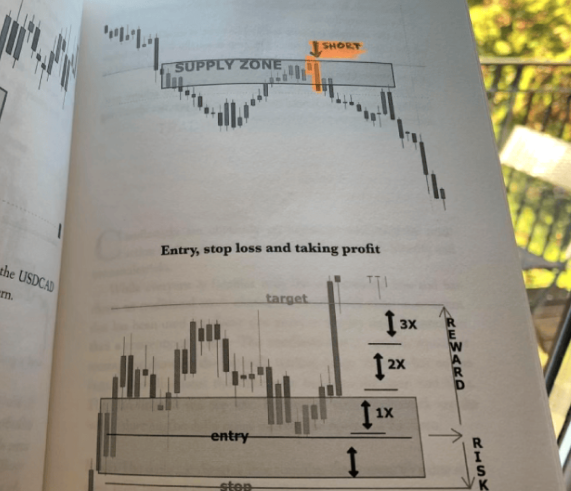
You cannot eliminate risk in foreign exchange, but you can manage risk with structured risk controls.
Developing Discipline in Forex Trading
Discipline separates serious traders from emotional participants. A professional framework requires rules that are applied consistently.
Traders often break rules after a losing trade. They increase lot size. They remove stop loss orders. They abandon their trading system.
Signs of Poor Discipline
- Overtrading during volatile sessions
- Ignoring risk tolerance levels
- Taking trades outside the defined framework
- Reacting to every spike in price
- Switching forex trading strategies weekly
Discipline doesn’t come from motivation. It comes from structure. When a framework defines every step, emotional decisions decrease.
Building Discipline Step-by-Step
- First, document your complete trading strategy.
- Next, predefine risk parameters before entering the market.
- Then, record every trade in a journal.
- Finally, review performance monthly to refine weaknesses.
This repeatable process builds confidence and improves win rate over time.
Choosing the Right Trading Style Within Your Framework
Not every trader should follow the same trading style. Your framework must align with your personality, schedule, and risk tolerance.
Market Analysis Component
Every trader must decide how to interpret market movements. Professional guidelines recommend combining:
- Technical analysis
- Fundamental analysis
- Price action observation
Technical analysis includes studying chart patterns, support and resistance levels, and indicators such as RSI. A single indicator should never define your decision. Instead, it should confirm broader structure.
Fundamental analysis focuses on key drivers such as:
- Interest rate announcements
- Inflation reports
- Employment data
- Central bank commentary
These factors influence currency price movements over time.
Trading Strategy Definition
- Entry rules
- Exit rules
- Stop placement
- Position sizing method
- Market conditions suitable for execution
Without predefined criteria, traders often hesitate or overtrade. A trading strategy should be clear enough that every trader must follow it without second-guessing.
3. Risk Management Structure
Risk management protects capital during losing periods. Even strong forex trading strategies experience drawdown.
Professional guidelines suggest:
- Risking a small percentage per trade
- Defining drawdown limits
- Avoiding much risk during high volatility
- Using proper stop loss placement
You cannot eliminate risk in foreign exchange, but you can manage risk with structured risk controls.
Developing Discipline in Forex Trading
A professional forex trading framework is not a single strategy. It is a structured system that connects analysis, execution, and evaluation.
Market Analysis Component
Every trader must decide how to interpret market movements. Professional guidelines recommend combining:
- Technical analysis
- Fundamental analysis
- Price action observation
Technical analysis includes studying chart patterns, support and resistance levels, and indicators such as RSI. A single indicator should never define your decision. Instead, it should confirm broader structure.
Position Sizing and Capital Allocation
Position sizing determines how much capital you risk per trade. Many traders ignore this step and focus only on entry signals.
- Proper position sizing ensures:Controlled drawdown
- Sustainable growth
- Protection of real capital
For example:
If your account is $10,000 and your risk tolerance is 1% per trade, you risk $100 on a single trade. Stop placement determines lot size. The math makes sense only when risk is calculated before execution.
Without structured position sizing, even profitable trades cannot protect you from large losses.
Risk management is not optional. It is the backbone of professional trading.
- Use a stop loss
- Define risk per trade
- Avoid increasing size after losses
- Protect against major spike events
Stop placement should align with technical structure, such as support and resistance levels or recent swing highs and lows.
Remember: you cannot predict every price move. Even the best forex trading framework will still lead to losing trades. The goal is controlled losses and larger winners.
Tools and Platforms for Execution
Technology supports execution but does not replace discipline.
Many traders use platforms like MetaTrader 5 to analyze charts and execute trades efficiently. A reliable broker ensures
- Fast order execution
- Stable spreads
- Transparent pricing
Live markets require preparation. Always test your trading system on a demo account before risking real capital.
Comparison Table: Structured vs Unstructured Trading
| Feature | Structured Framework | Unstructured Trading |
| Risk Controls | Clearly defined | Random |
| Position Sizing | Calculated per trade | Emotional |
| Discipline | Applied consistently | Often ignored |
| Drawdown Limits | Predefined | Uncontrolled |
| Market Conditions | Evaluated before entry | Ignored |
| Long-Term Growth | Sustainable | Inconsistent |
Section Summary
Advanced risk management methods
- Trading psychology control techniques
- Adapting strategies across market conditions
- Performance tracking and system refinement
- Professional-level execution standards
A professional forex trading framework is not just about entry signals. It combines structure, discipline, data, and emotional control into one coherent system.